Asakusa is one of the most popular tourist areas in Japan, consistently ranking among the top destinations. While Sensoji Temple is the iconic landmark of Asakusa, the surrounding neighborhood is filled with many other attractions. You can stroll through charming old streets, enjoy local food and street snacks, browse souvenir shops, walk along the Sumida River, and even reach Tokyo Skytree and the famous Kappabashi Tool Street—all within walking distance.
Asakusa Culture Tourist Information Center
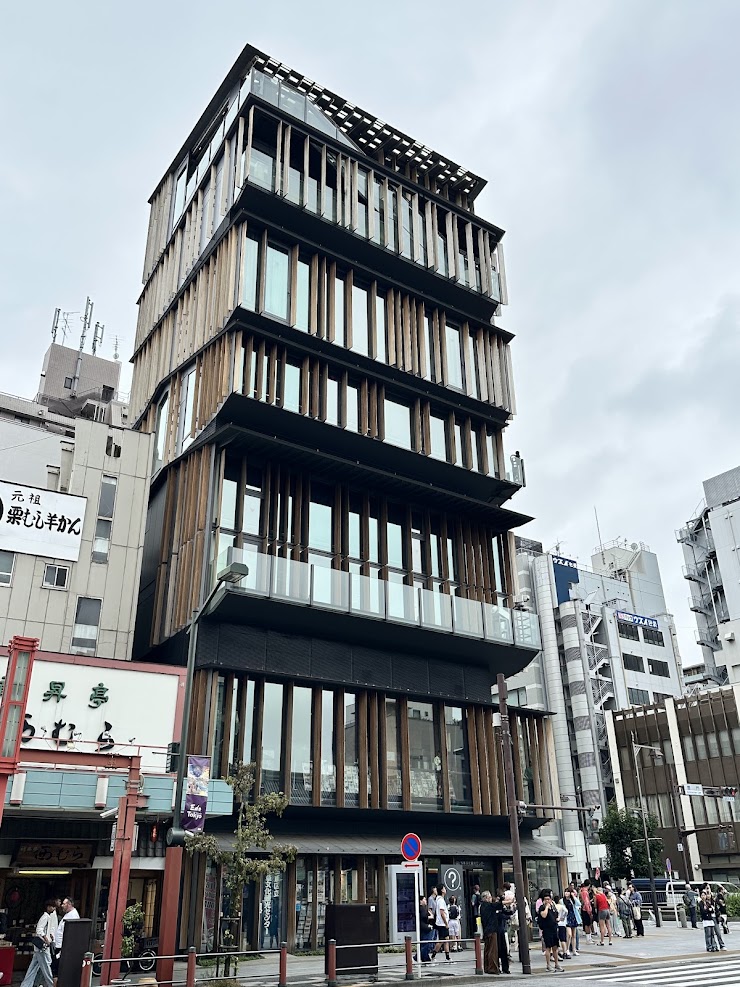
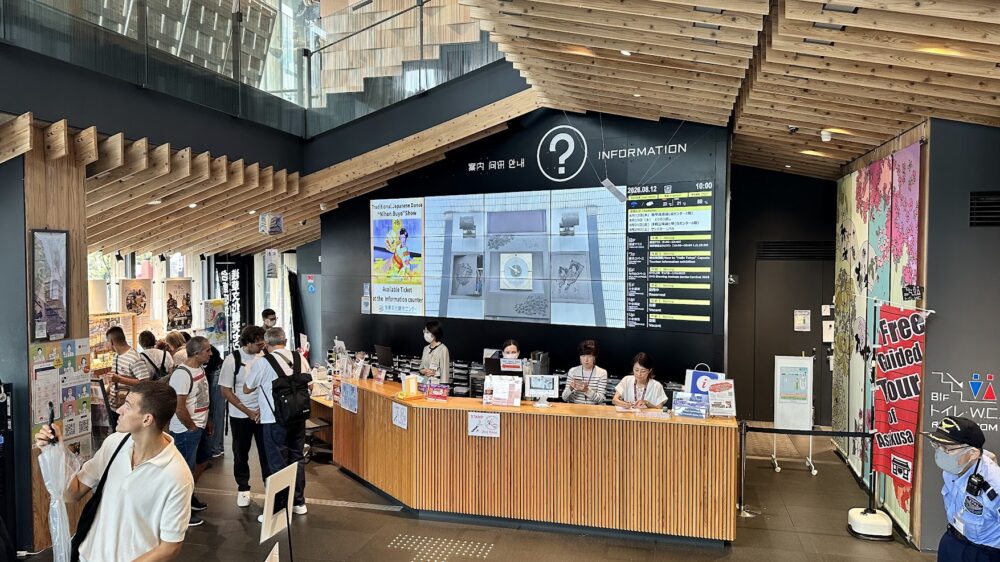
The Asakusa Culture Tourist Information Center is located directly in front of Kaminarimon and provides travel information not only for Tokyo but for destinations throughout Japan. Visitors can receive free assistance in four languages—Japanese, English, Chinese, and Korean—and the facility also includes a currency exchange counter, nursing room, and café.
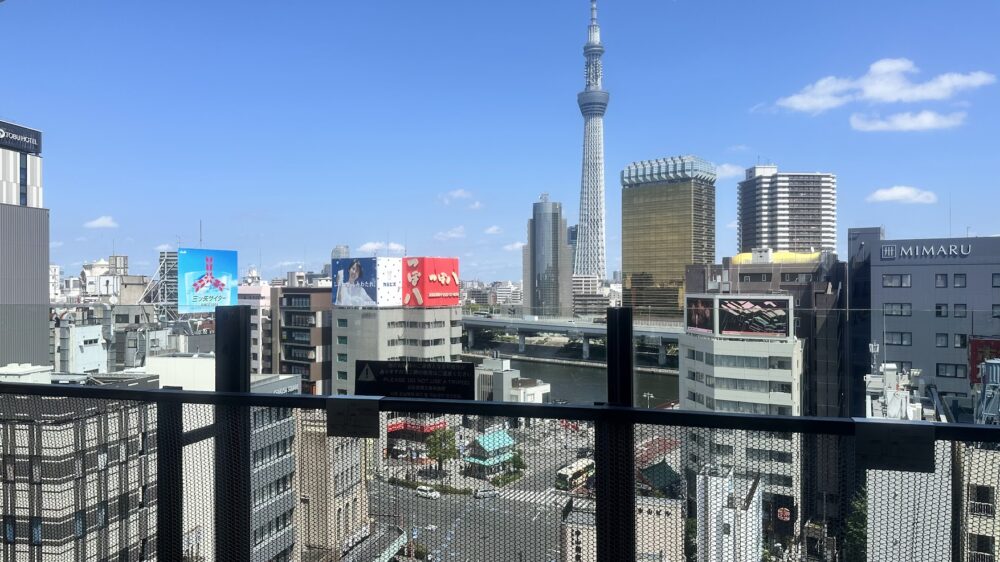
The free observation terrace is another highlight, offering a panoramic view over Sensoji Temple—one of the best photo spots in the area. Since the terrace is open until 10 p.m., you can also enjoy the magical night views of the illuminated Sensoji Temple and Tokyo Skytree. It is truly one of the places you shouldn’t miss when exploring Asakusa.
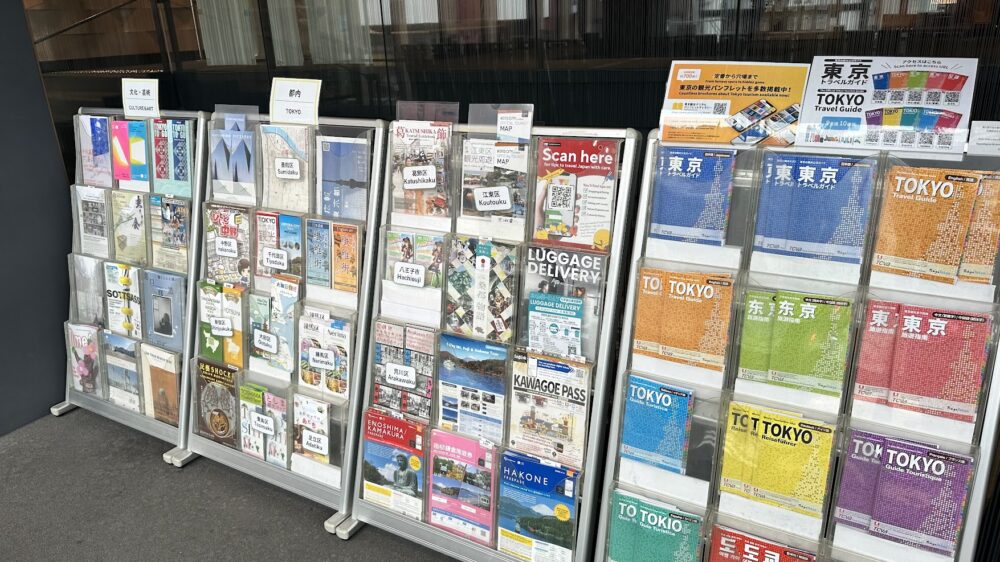
On the first floor, you’ll find tourist information, a currency exchange counter, and even souvenirs. Brochures for destinations across Japan are available on the second floor. From the 8th‑floor observation terrace, you can enjoy panoramic views of Tokyo Skytree and Sensō‑ji. Admission is free. General Information
Sensō‑ji Temple: Discover 1,400 Years of History
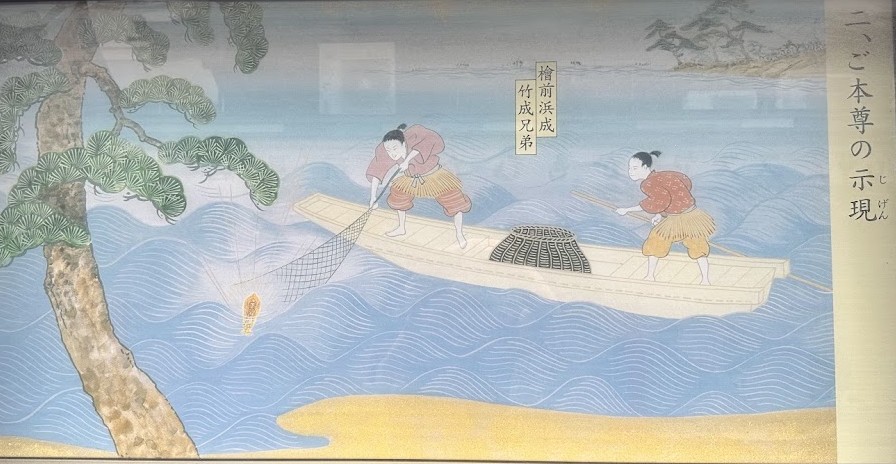
Sensō‑ji is the oldest temple in Tokyo, with origins dating back to 628 AD. According to legend, two brothers who worked as fishermen discovered a statue of Kannon, the Buddhist deity of compassion, in the Sumida River. The local leader, Hajino Nakatomo, recognized its sacred significance and converted his home into a temple to enshrine the statue—marking the beginning of Sensō‑ji.
Over the centuries, Sensō‑ji continued to grow and develop, becoming one of Japan’s most renowned spiritual sites. Today, it attracts millions of visitors each year, drawing people from across Japan and around the world who come to experience its rich history and cultural heritage.
Kaminarimon (Thunder Gate)-The Symbol of Asakusa
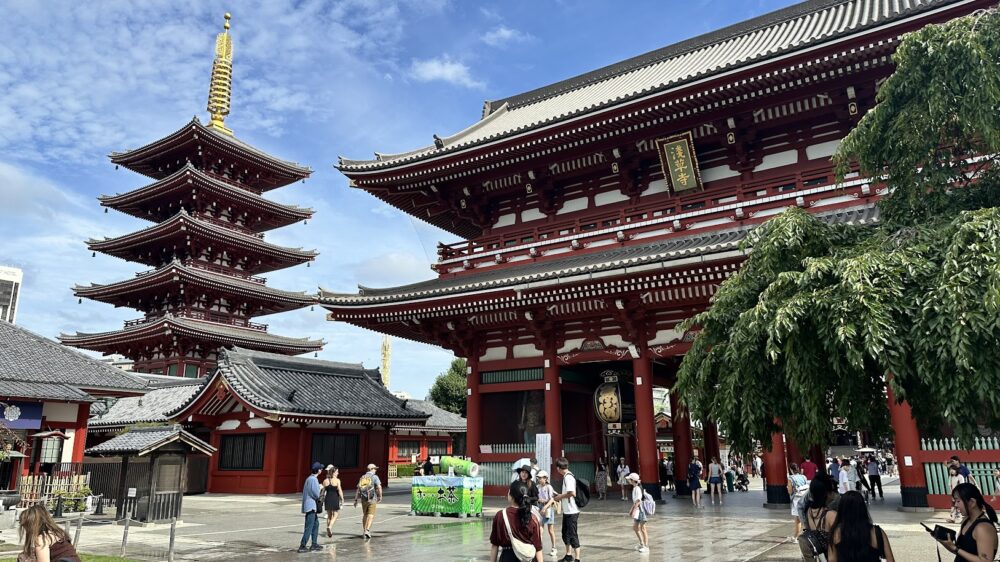
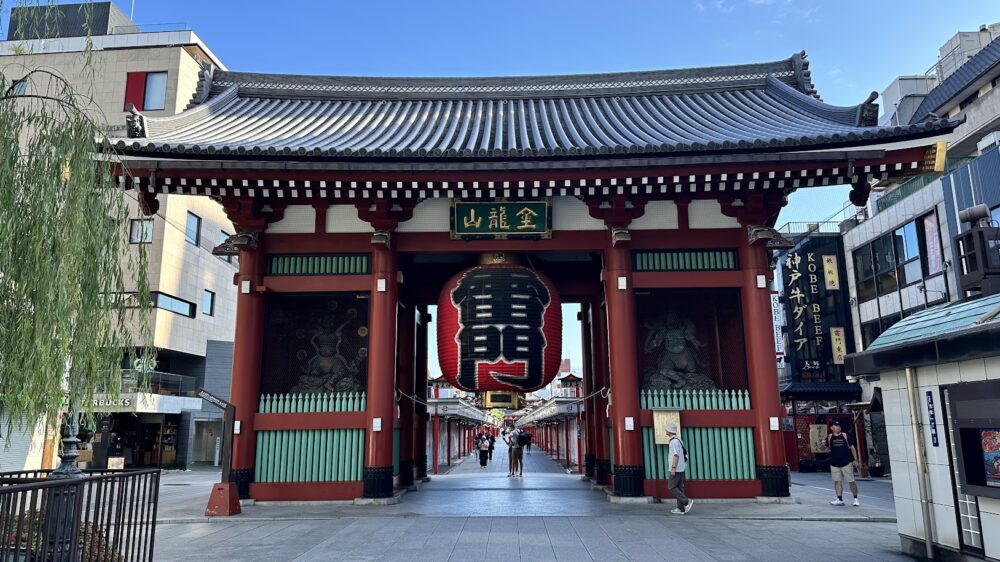
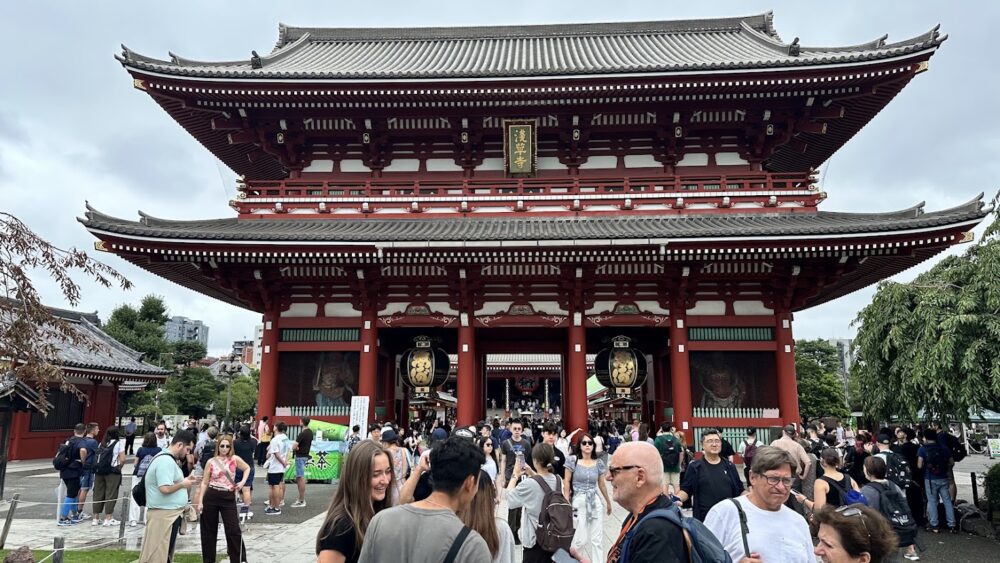
Kaminarimon, the iconic symbol of Asakusa, is formally known as the “Fūraijinmon.” The name comes from the two guardian deities enshrined on either side of the gate—Fūjin, the god of wind, and Raijin, the god of thunder. Kaminarimon is the iconic gate marking the entrance to the approach to Sensō‑ji. Its massive red lantern and the statues of the guardian deities Fūjin and Raijin on either side make it instantly recognizable. The front of the lantern bears the gate’s common name, “Kaminarimon,” while the back displays its formal name, “Fūraijinmon.”
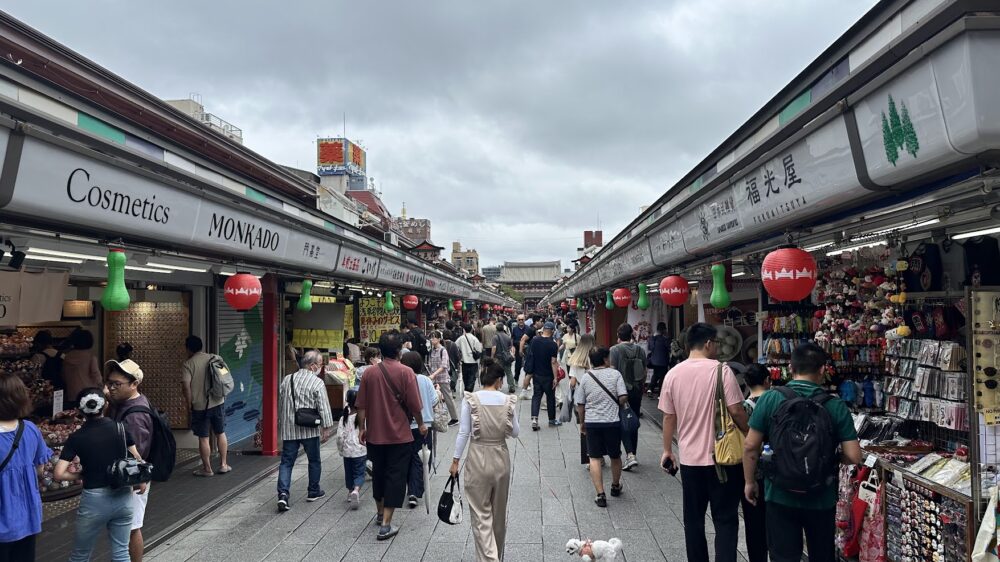
Passing through the gate leads you into Nakamise Street , where numerous shops line the traditional pathway to the temple. The area around Kaminarimon is usually crowded with visitors, often with a queue forming for photo spots. However, early in the morning—up to around 8 a.m.—it is relatively quiet , making it an excellent time to take photos at your own pace.
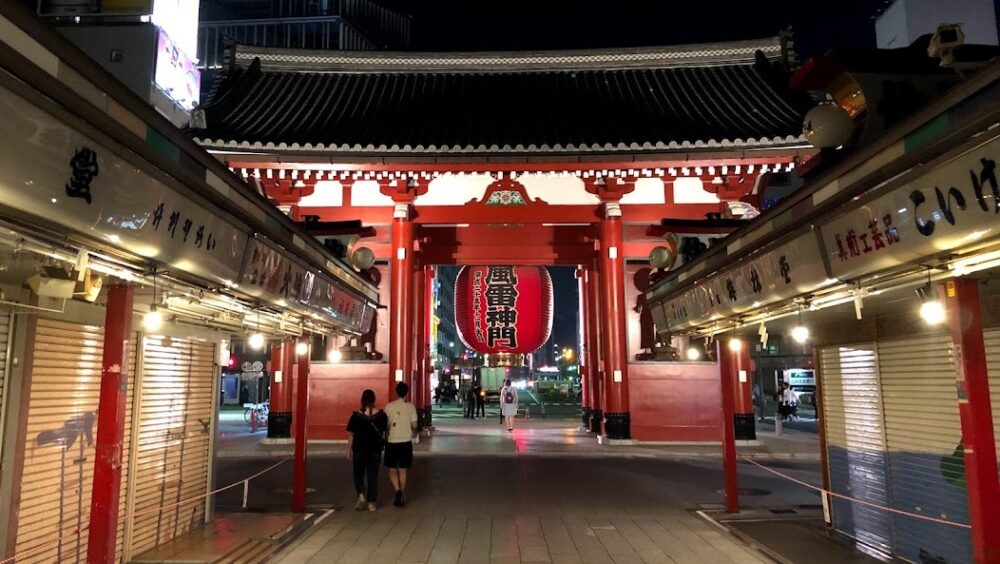
Kaminarimon (back): The characters “Fūraijinmon” can be seen. Nakamise Shopping Street
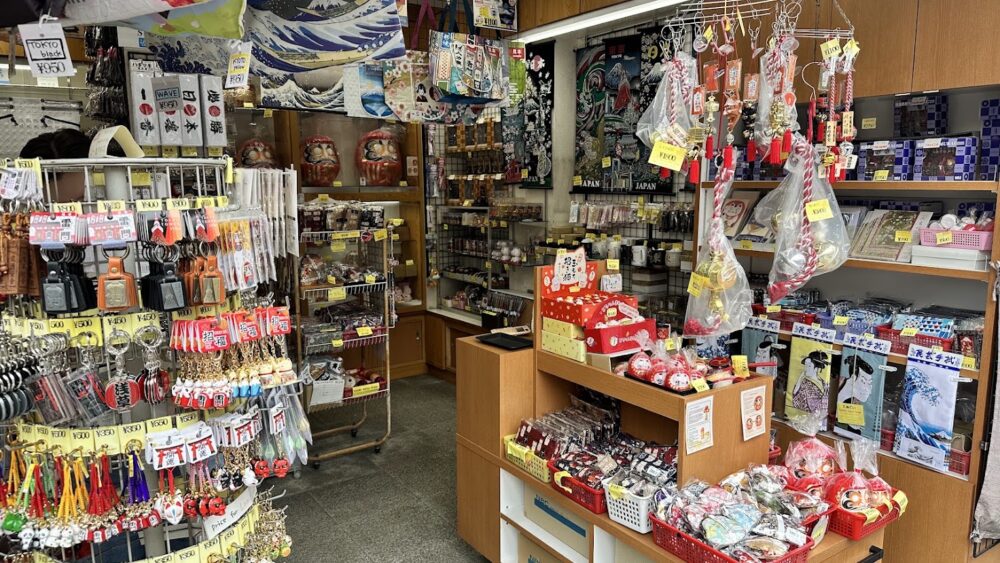
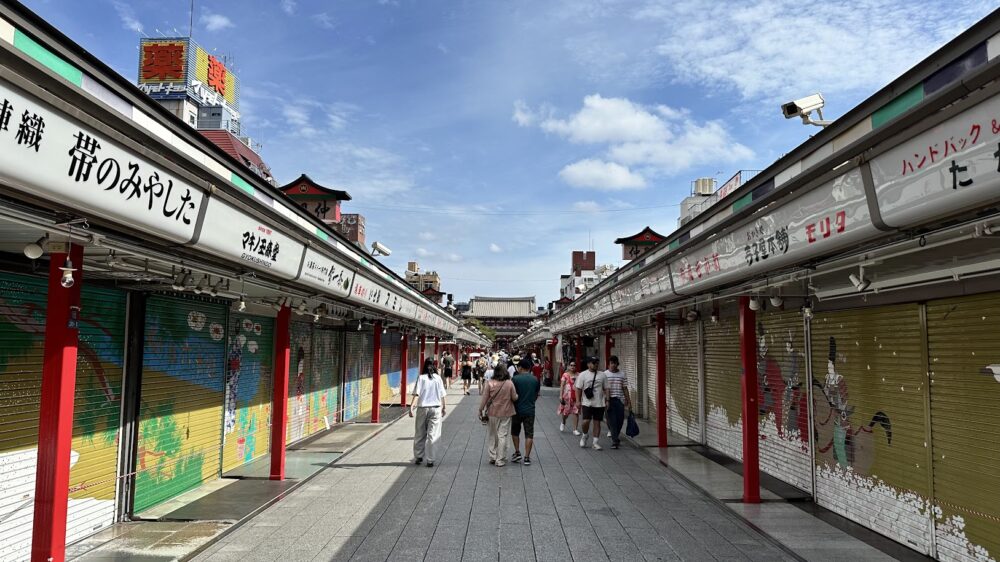
From Kaminarimon to Hōzōmon, Nakamise Street stretches for about 250 meters and is one of Japan’s oldest shopping streets, always full of lively energy. Around 90 shops line both sides of the street, offering take‑out snacks you can enjoy on the spot, as well as traditional sweets and crafts perfect for souvenirs.
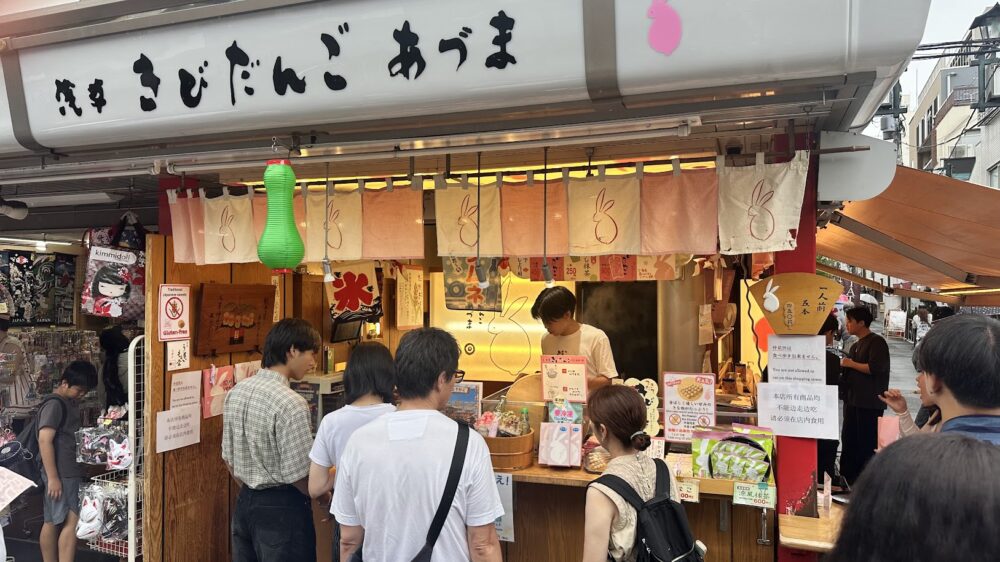
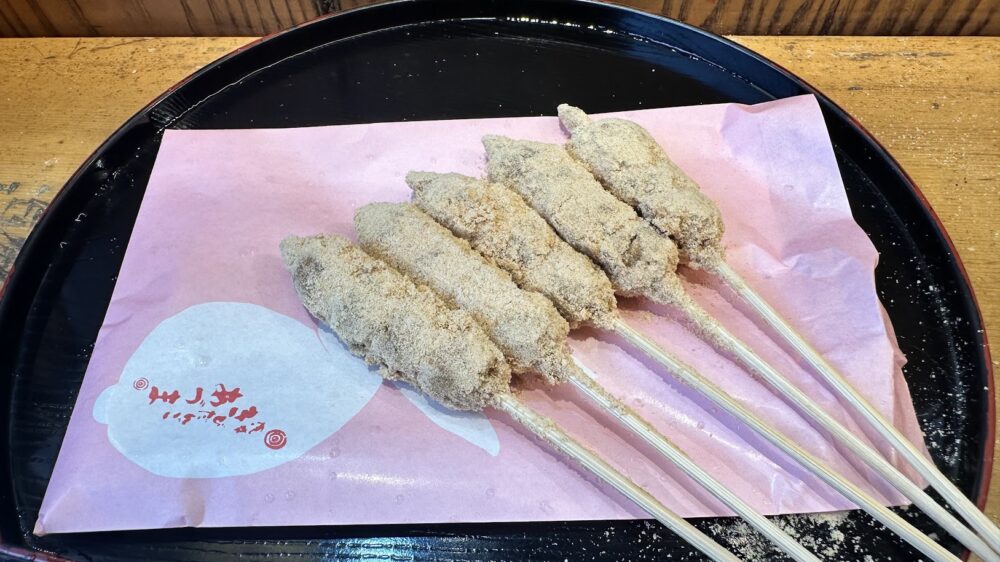
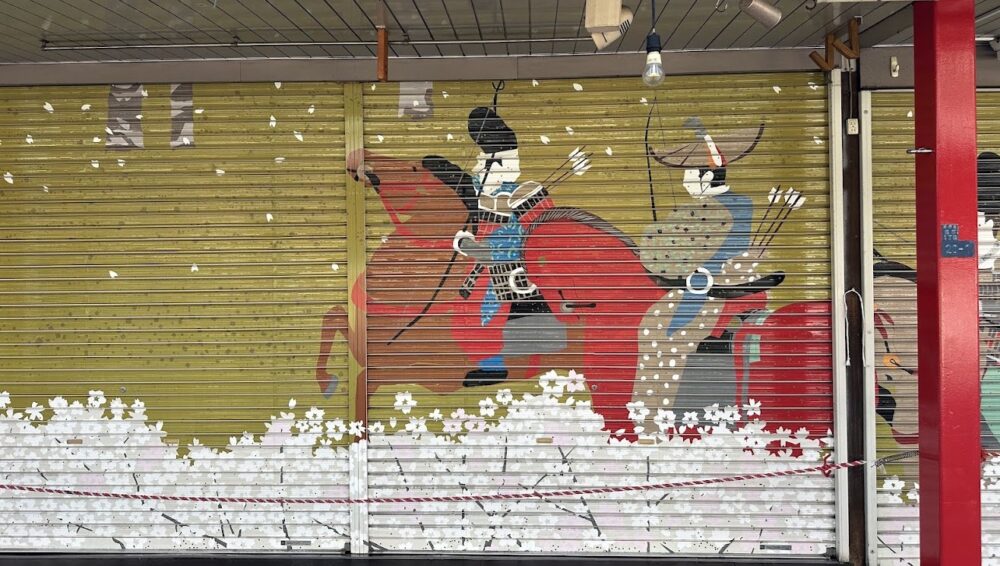
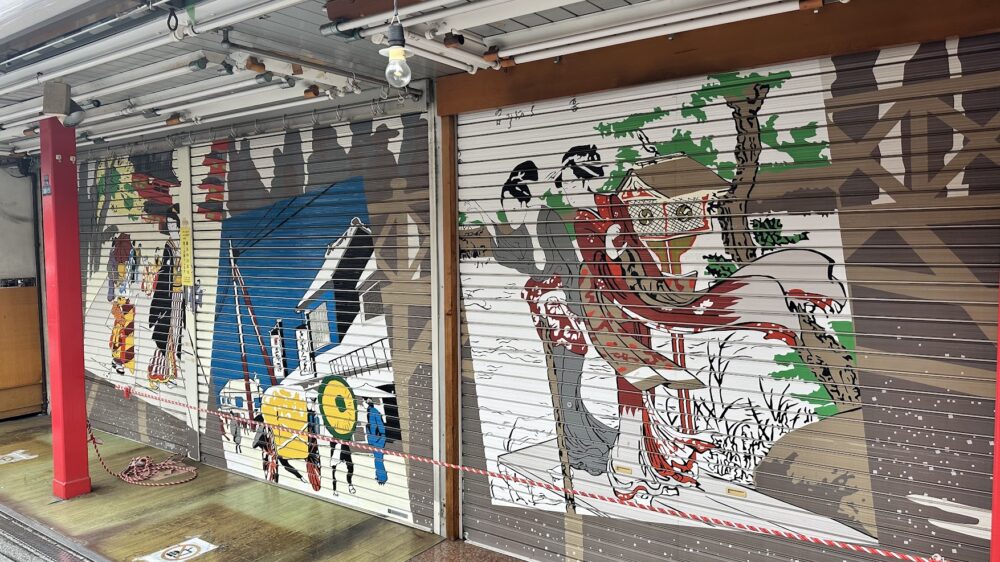
Kibidango Azuma: A hugely popular shop located on the right side just after entering Nakamise Street. Kibidango — five pieces for 450 yen, coated in sweet kinako — a soft millet‑flour sweet dusted with roasted soybean flour. Nakamise Shutter Murals: “Asakusa Emaki”
In the early morning, before the shops open, locals can be seen walking or jogging along Nakamise Street. It’s a lovely time to slip out of your hotel and enjoy a relaxed stroll. You can enjoy the beautiful Japanese-style illustrations painted on the shutters You can enjoy the beautiful Japanese-style illustrations painted on the shutters Nakamise Street is usually crowded with tourists, but once the shops close and the shutters come down, beautiful mural-style artworks depicting Japanese history appear. An evening or early-morning stroll is highly recommended.
Hozo-mon Gate (commonly called Nio-mon Gate)
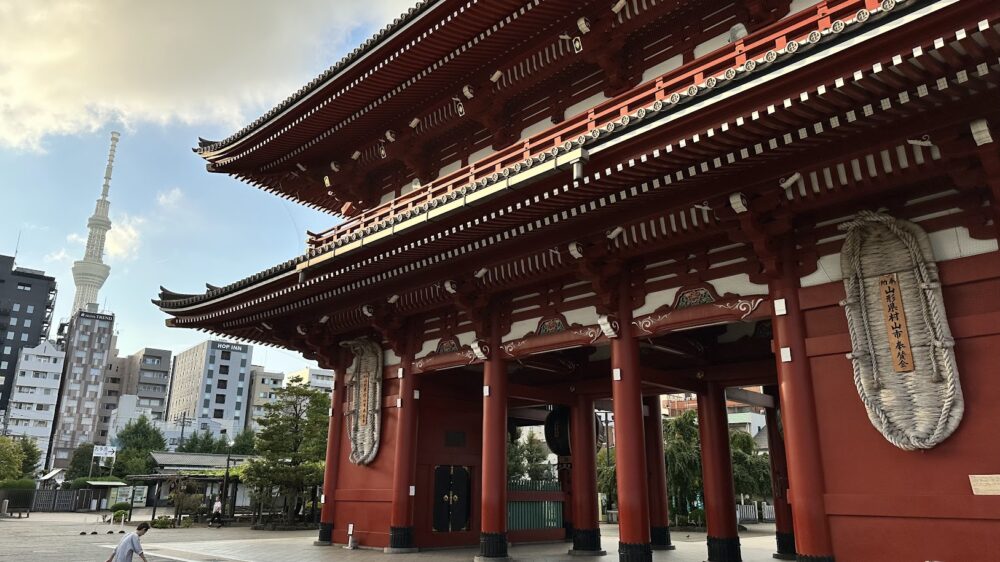
Hōzōmon Gate, with the Nio guardian statues visible on both sides. As you walk along Nakamise Street, you will come to the impressive Hōzōmon Gate. Originally called the Niōmon, it houses a pair of guardian Nio statues on each side. In 1964, the gate was renamed Hōzōmon because it stores important cultural treasures, including the “Genban Issaikyō,” a complete set of Buddhist scriptures designated as a National Important Cultural Property, along with other historic sutras.
Main Hall (Kannondo Hall)
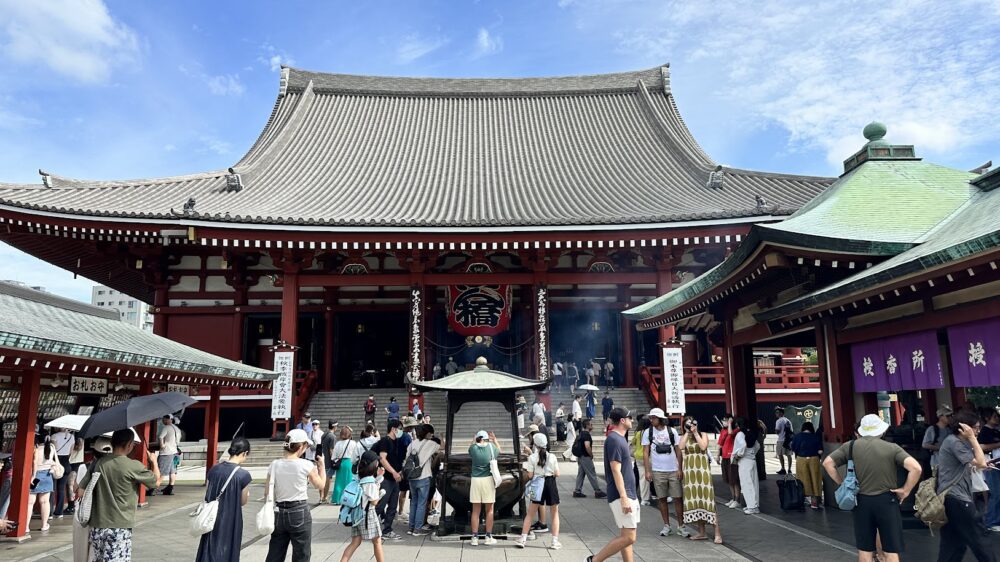
Since its founding in 628, the Main Hall has been damaged and rebuilt nearly twenty times throughout its long history. The previous hall, designated a national treasure, was destroyed in the Tokyo air raids of March 1945, but the present Main Hall was reconstructed in 1958. The Main Hall houses the revered statue of Kannon, the temple’s principal deity, and serves as the center of worship at Sensō‑ji. Visitors come here to offer prayers, draw omikuji fortunes, and take in the calm, incense‑filled atmosphere that contrasts with the lively Nakamise shopping street outside. Although the current structure was rebuilt after World War II, it faithfully follows traditional temple architecture and preserves the solemn character of the original hall. The space remains the spiritual heart of Sensō‑ji, where centuries of devotion continue to shape the temple’s identity and daily rituals.
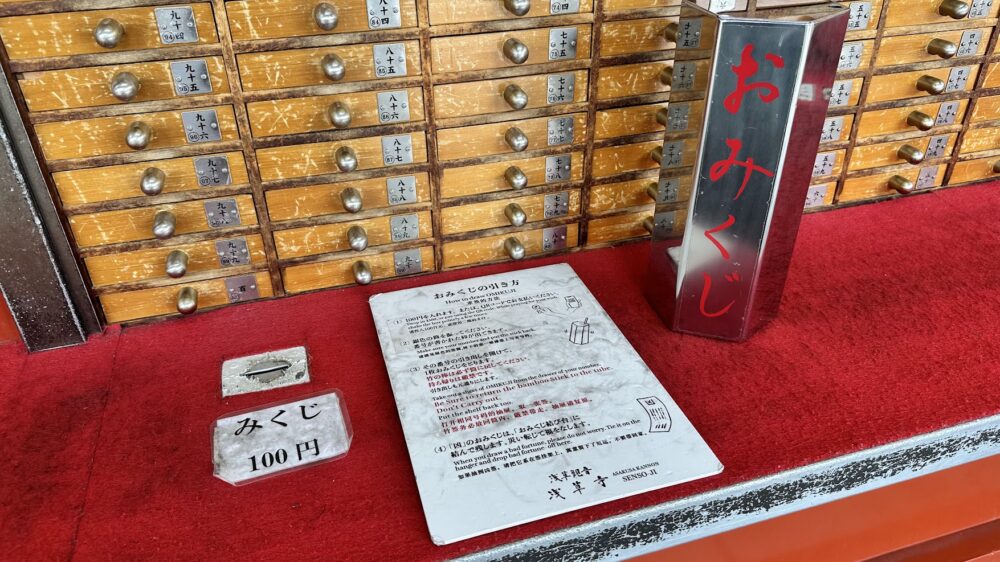
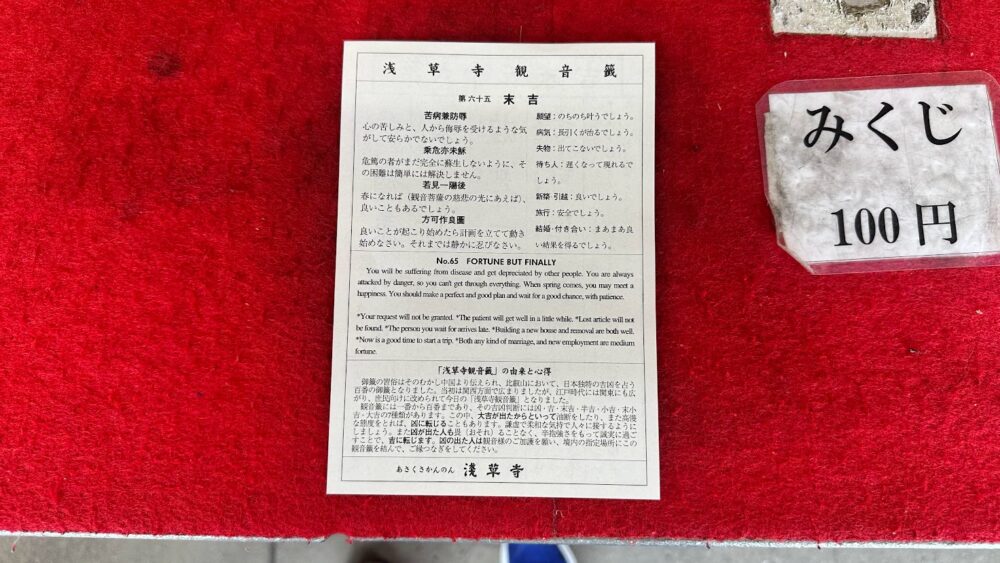
The omikuji costs 100 yen, and instructions on how to draw it are provided in English and Chinese. You can receive the message in English. Omikuji are fortune slips drawn at temples and shrines in Japan to learn one’s luck. At Sensoji, the omikuji follow a traditional method: you shake a silver cylinder, draw out a single wooden stick, and then take the corresponding fortune slip from the drawer marked with the same number. Sensoji is known for having a relatively high number of “bad” fortunes, but these are considered messages from the Bodhisattva encouraging you to be mindful in your daily life, so there is no need to feel discouraged. After reading your fortune, tie the slip at the designated spot to leave the bad luck behind.
Five‑Storied Pagoda
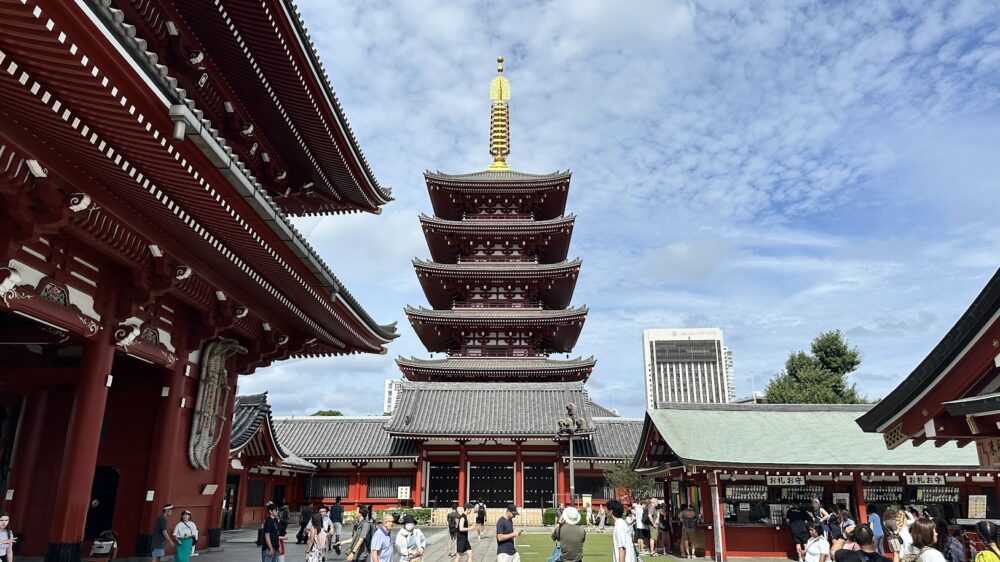
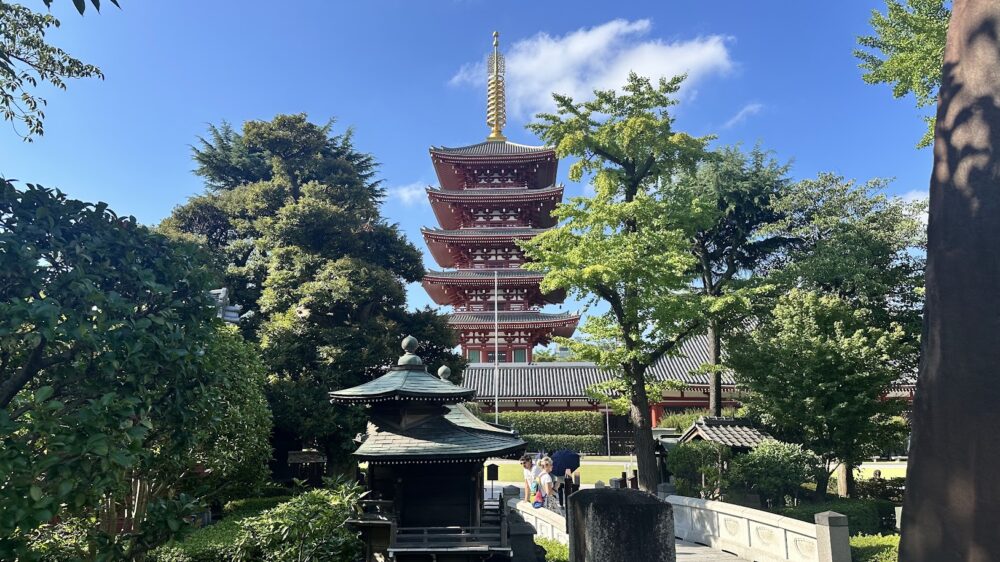
The current pagoda was rebuilt in 1973. On its top floor, it enshrines a sacred relic of the Buddha, which was presented by Sri Lanka’s Isurumuniya Temple in 1966. The Five‑Story Pagoda stands gracefully beside the Main Hall and symbolizes the Buddhist view of the universe, with each tier representing a different element. Its elegant silhouette is one of Sensō‑ji’s most recognizable landmarks, rising above the temple grounds and contrasting beautifully with the modern city around it. Although visitors cannot enter the structure, the pagoda remains an important spiritual symbol and a reminder of the temple’s long history, faithfully rebuilt in the mid‑20th century using traditional architectural techniques.
Yogodo Hall
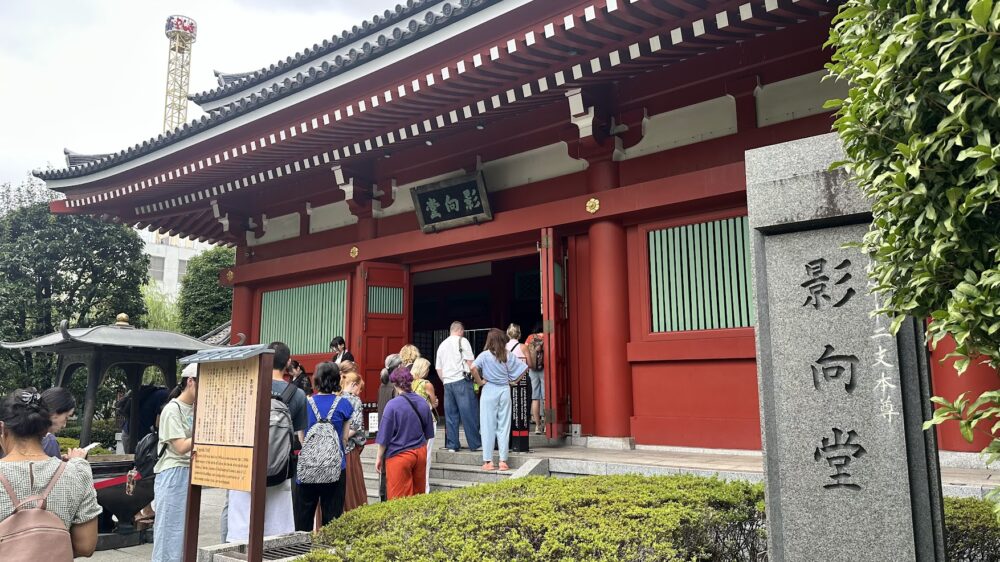
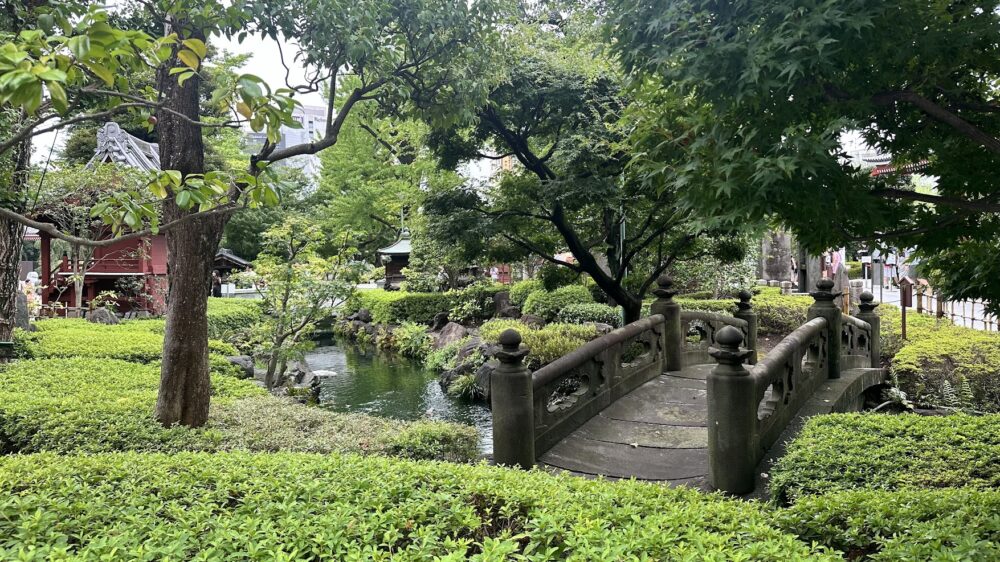
The goshuin for Sensoji can be obtained at the Yogodo. The offering is 500 yen. Koi pond, old stone bridge, and lush greenery make the Yogodo beautifully atmospheric. The Five‑Story Pagoda as seen from Yogodō. After visiting the Main Hall, you will find the vermilion pavilion called the Yogodō on the west side (to your left). Here, Daikokuten—one of the Seven Gods of Good Fortune—is enshrined. You can also receive Sensoji’s goshuin at this hall.
Asakusa Shrine:A Sacred Place Honoring Senso‑ji’s Founders
The two fisherman brothers pulling up the statue of Kannon The origins of Asakusa Shrine date back to the year 628. According to tradition, two local fishermen—brothers Hinokuma Hamanari and Hinokuma Takenari —were out fishing when the same human‑shaped statue was repeatedly caught in their nets. Puzzled, they consulted Hajino Nakatomo, a knowledgeable elder in the area, who told them that the statue was an image of the Bodhisattva Kannon. From then on, the brothers prayed to the statue every day.Nakatomo became a monk and turned his home into a temple, which is said to be the beginning of Sensō‑ji. After Nakatomo’s death, it is said that the Bodhisattva Kannon appeared in a dream to Nakatomo’s son, instructing him to enshrine Nakatomo, Hamanari, and Takenari as deities. Following this divine message, the three were enshrined, and this is considered the origin of Asakusa Shrine.
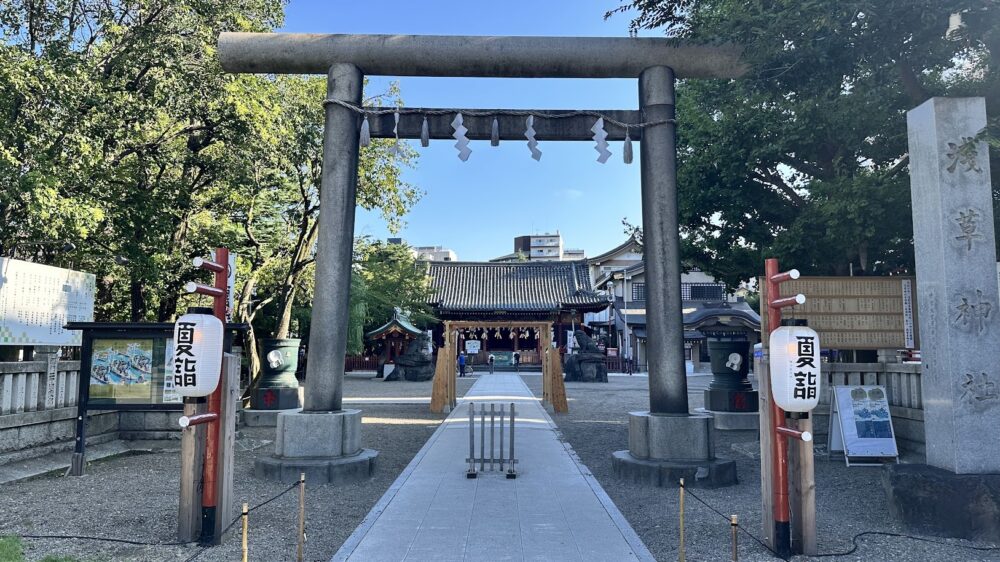
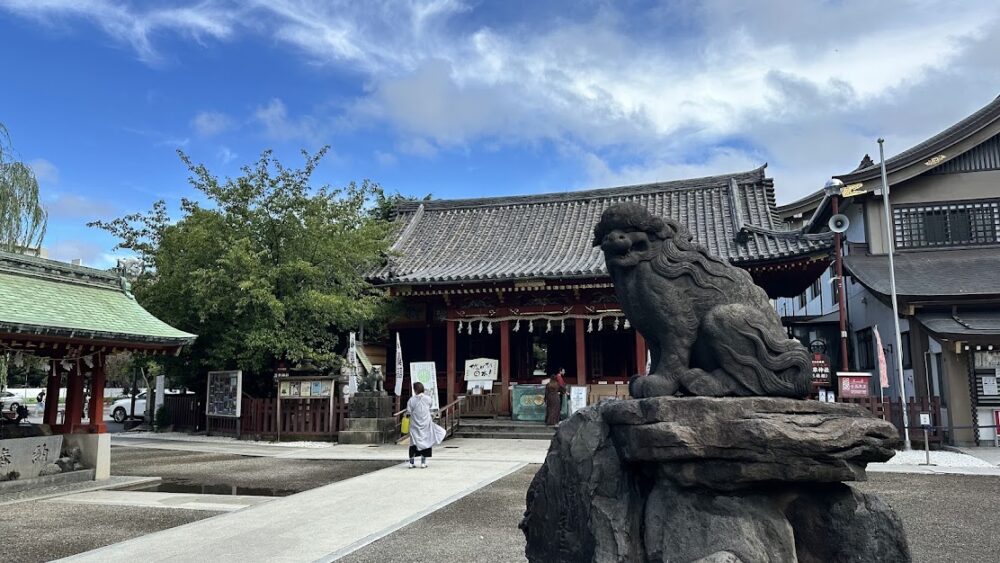
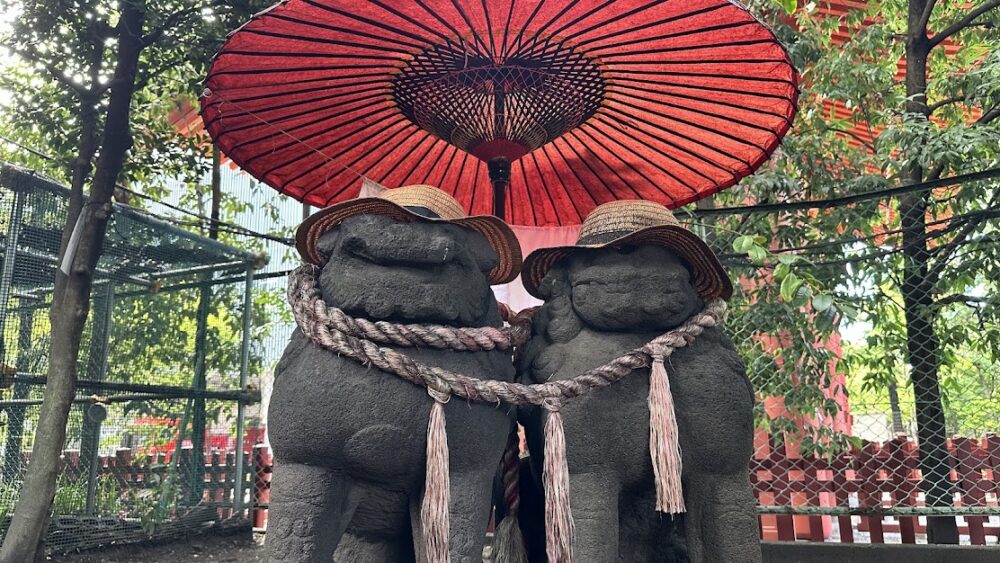
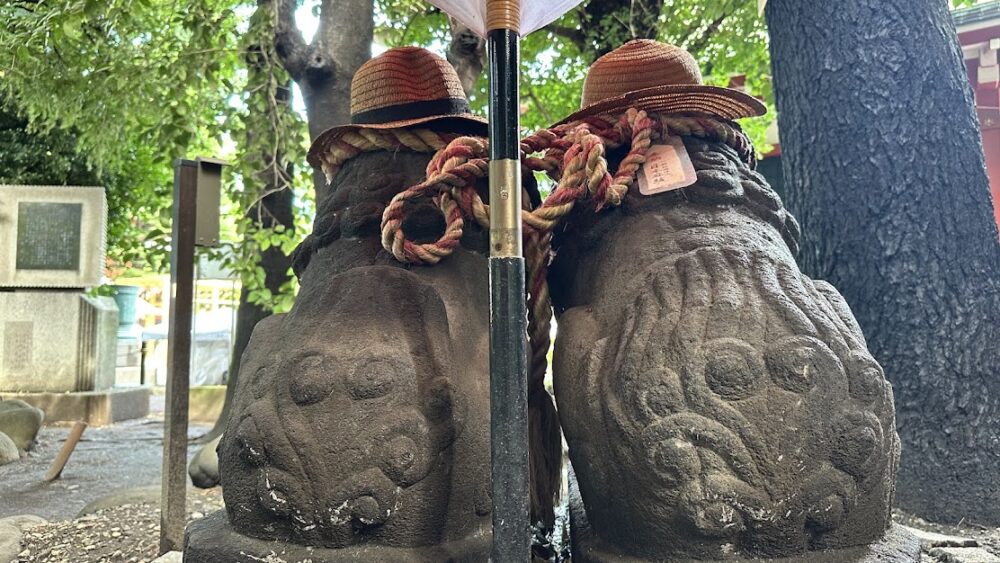
Asakusa Shrine, quietly standing right next to Senso‑ji The main hall of Asakusa Shrine and its guardian dogs A pair of guardian dogs symbolizing a harmonious, loving couple Can you see how the tail forms a heart shape? In contrast to Senso‑ji, which is always bustling with tourists, Asakusa Shrine stands quietly beside it. The highlight is the pair of affectionate “married” guardian dogs located just to the right after passing through the torii gate. Their adorable expressions and heart‑shaped tails are particularly charming, and they are believed to bring blessings for marital harmony and successful romance — so don’t forget to pay them a visit.
Niten-mon Gate (Important Cultural Property)
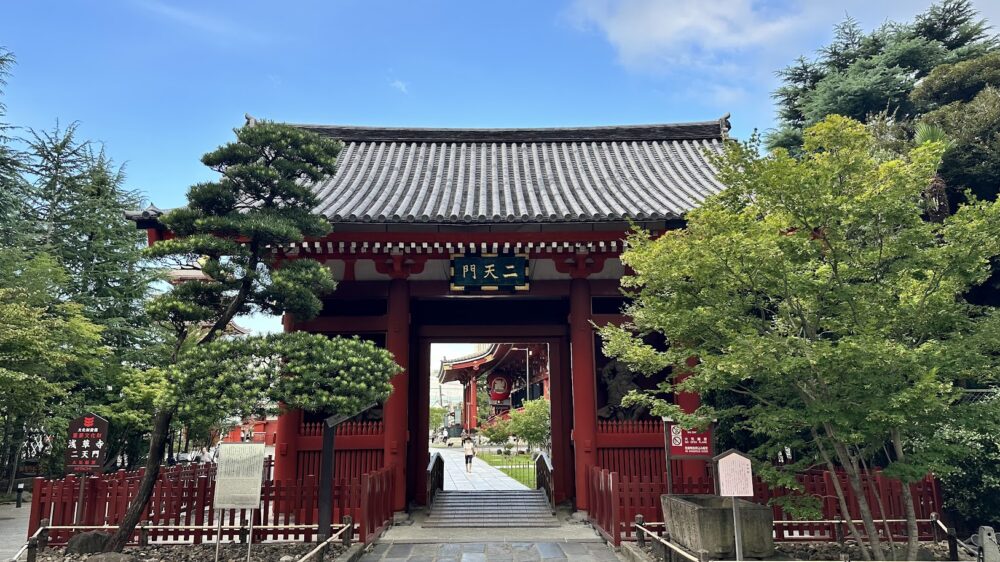
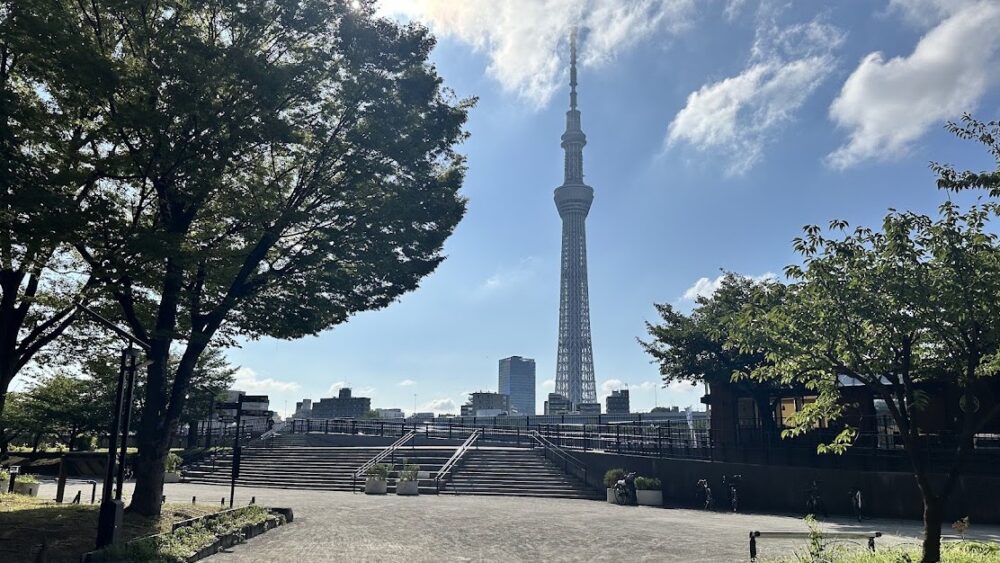
Niten-mon Gate The Nitenmon is a vermilion gate located on the east side of the Main Hall and is designated as an Important Cultural Property of Japan. Among the Four Heavenly Kings who guard the four directions in Buddhism, two of them—Zōjōten and Jikokuten—are enshrined here. As you pass through the Nitenmon and continue outward, you will soon see the Tokyo Skytree. The distance from Sensō‑ji to the Skytree is about 1.5 kilometers, roughly a 20‑minute walk.
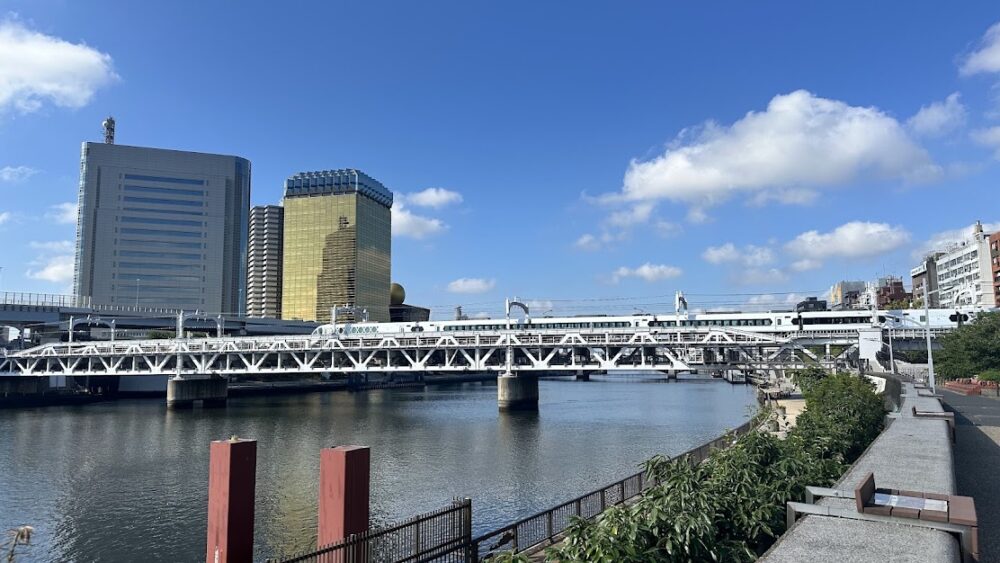
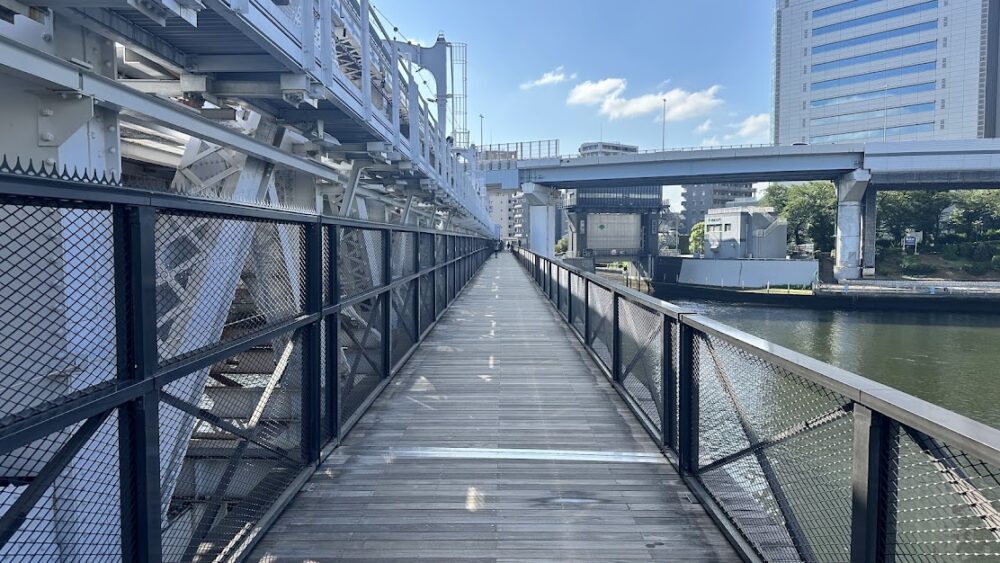
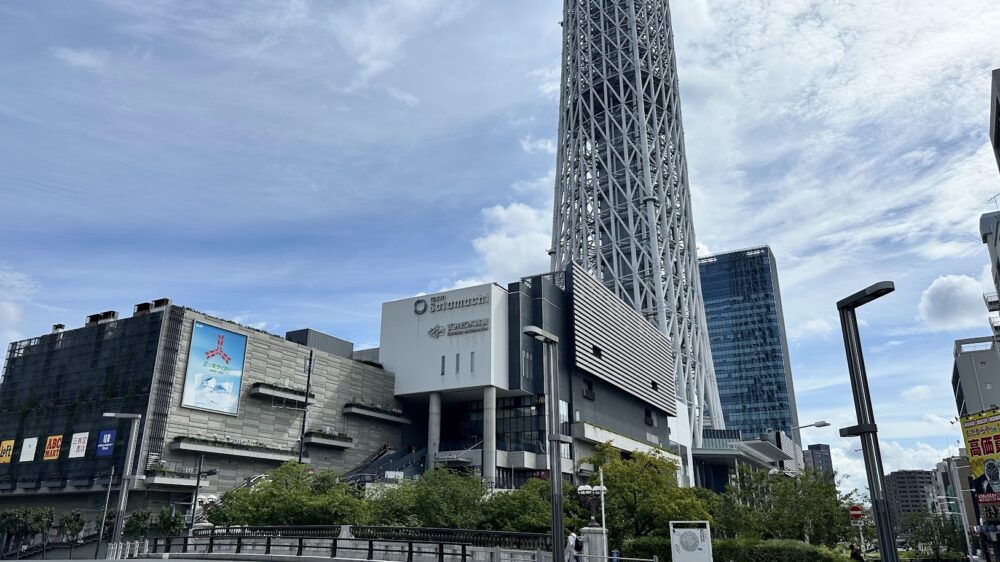
Straight ahead from the Nitenmon, the Sumida River and Tokyo Skytree come into view. Sumida River Walk, the pedestrian bridge over the Sumida River Sumida River Walk, the pedestrian bridge over the Sumida River You can find more about Tokyo Skytree and Tokyo Solamachi here.
Japan Awaits You
Tokyo Skytree and Tokyo Solamachi: A Complete Guide to the Landmark and Its Surroundings
Discover Tokyo Skytree’s observation decks, night illuminations, and the shopping and dining at Tokyo Solamachi. Learn about ticket options and convenient acces…
Goshuin: Sensoji & Asakusa Shrine
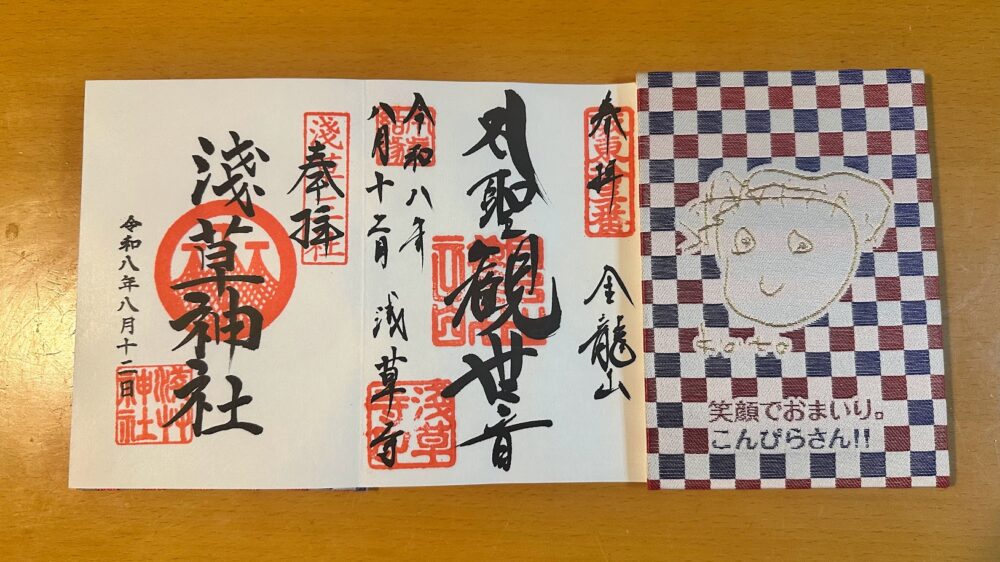
Sensoji (right): The name of the Bodhisattva enshrined in the center, with the temple name at the lower left. Asakusa Shrine (left): The shrine’s name is written in the center. Goshuin were originally given as proof that a sutra had been offered to a temple. Around the 1700s, they became more common and gradually changed into something that worshippers could receive simply by visiting. Today, goshuin are offered not only at temples but also at shrines as a record of one’s visit.after making your prayer. When receiving a goshuin, you make a monetary offering. Most temples and shrines set a fixed amount, and 500 yen is generally standard. Some places allow you to decide the amount freely; in those cases, offering around 500 yen is appropriate.
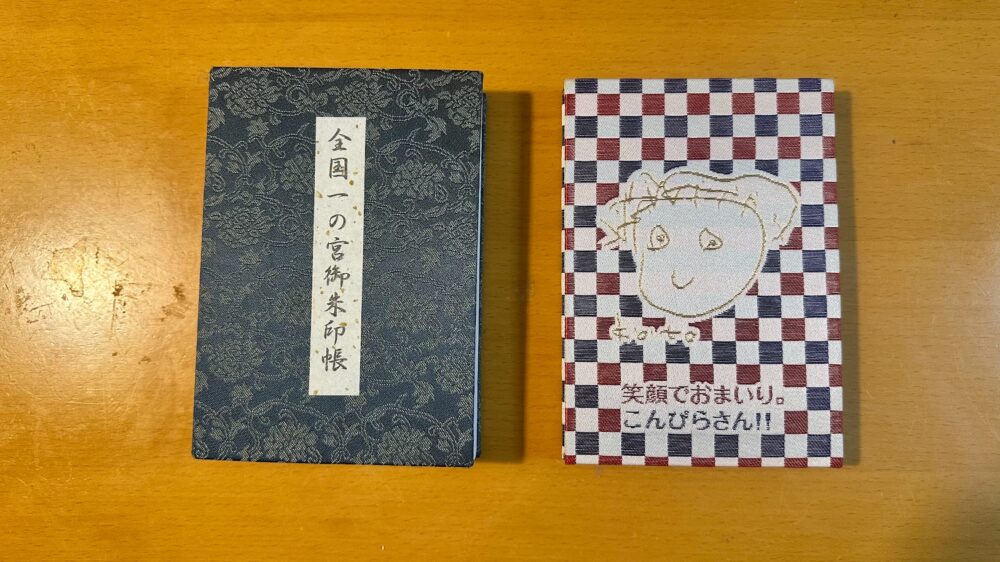
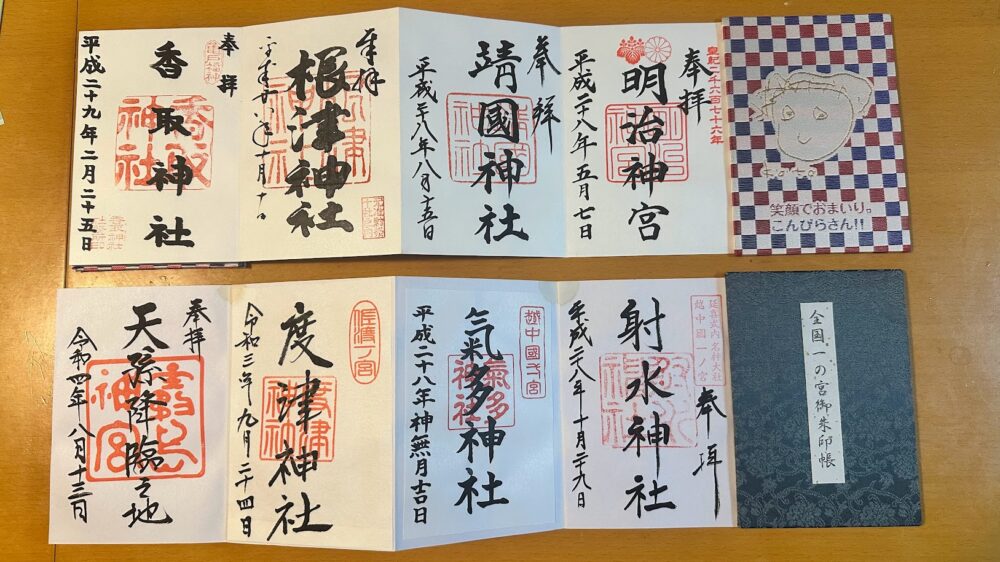
Goshuin-cho A goshuin‑chō is not shaped like a regular notebook; instead, it consists of one long sheet of paper folded in an accordion style. To receive goshuin, you will need a goshuin‑chō (stamp book). If you do not have one, you can purchase it at the temple or shrine you are visiting—an excellent keepsake from your trip to Japan.
Edo Machi Walk – Exploring Streets That Preserve the Atmosphere of Edo
“Edo Machi” refers to streetscapes that evoke the atmosphere of the Edo period. Around Senso‑ji, you’ll find shopping streets that preserve this traditional charm, making the area a delightful place for visitors to explore.
Asakusa Denbōin Street
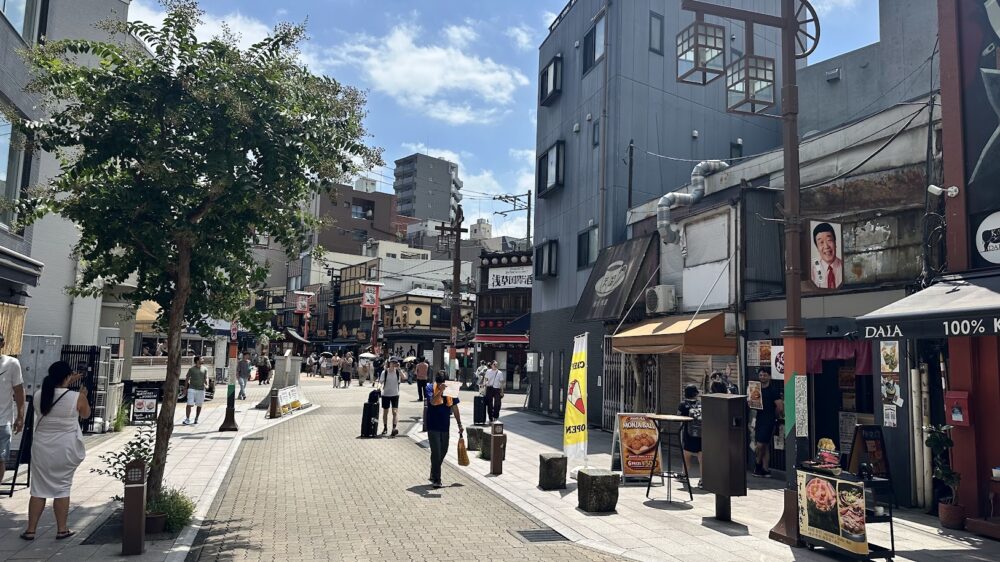
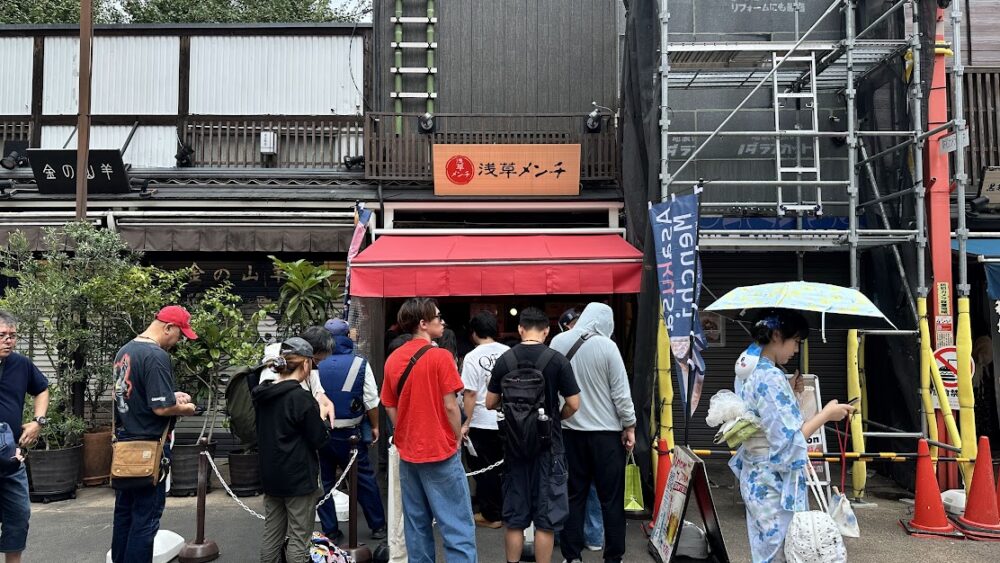
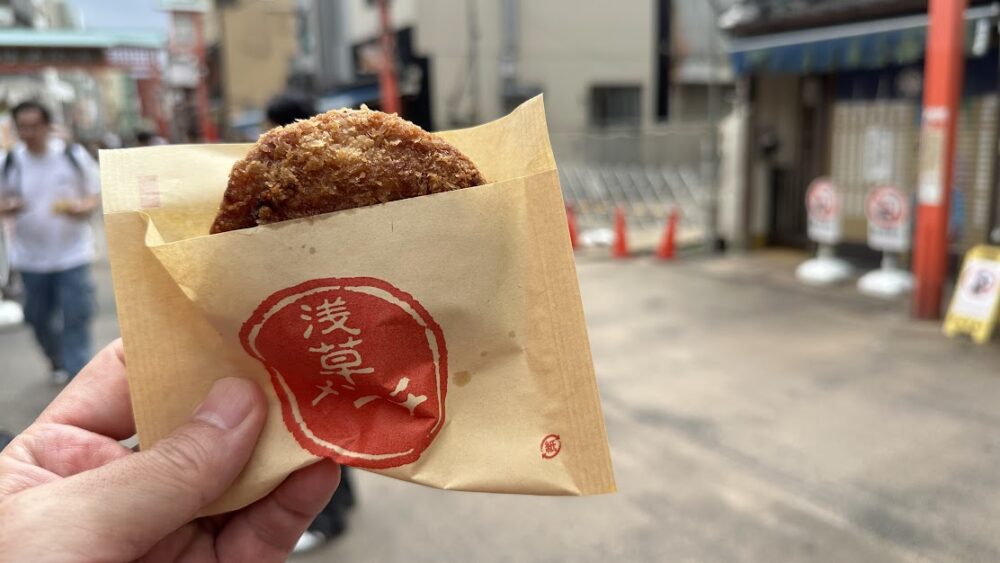
On Denbōin Street, you can enjoy shopping and local food amid the nostalgic atmosphere of old‑Tokyo. Asakusa Menchi on Denpōin Street is a popular shop that always has a line of customers. A piping‑hot menchi‑katsu(\400), enjoyed in the designated eating area (walking while eating is prohibited.). Denbōin Street intersects with Nakamise Street and offers plenty of food and shopping. Traditional Japanese crafts, souvenirs, and popular local eateries line the street, making it an ideal place to browse for gifts. With its old‑fashioned Japanese townscape still preserved, it’s an area that’s enjoyable to stroll through.
General Information
Name Asakusa Menchi Address 2-3-3 Asakusa, Taito-ku, Tokyo Hours 9:00 a.m. – 7:00 p.m. Note There is a dining space next to the shop. (Eating while walking is not allowed.)
Nishi Sando
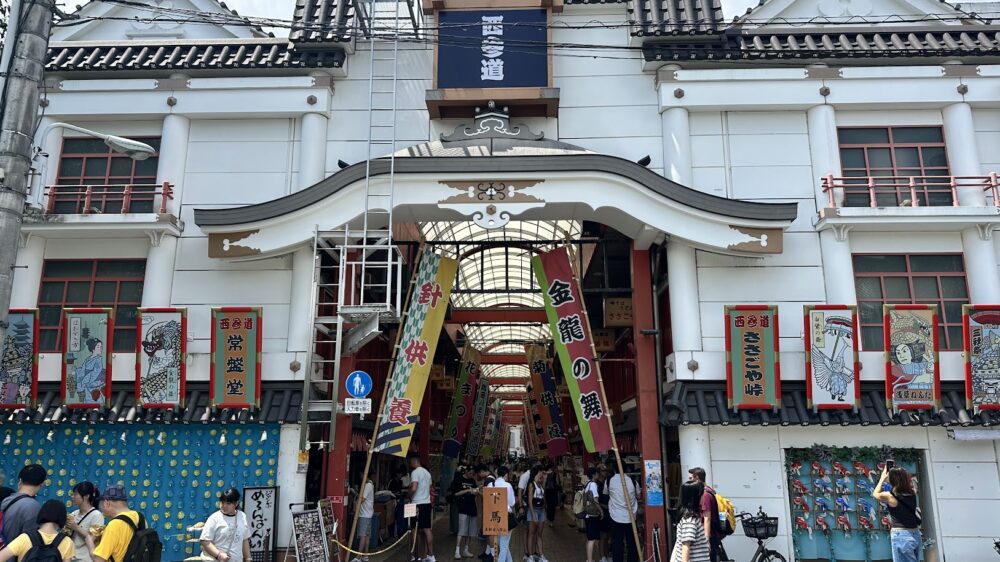
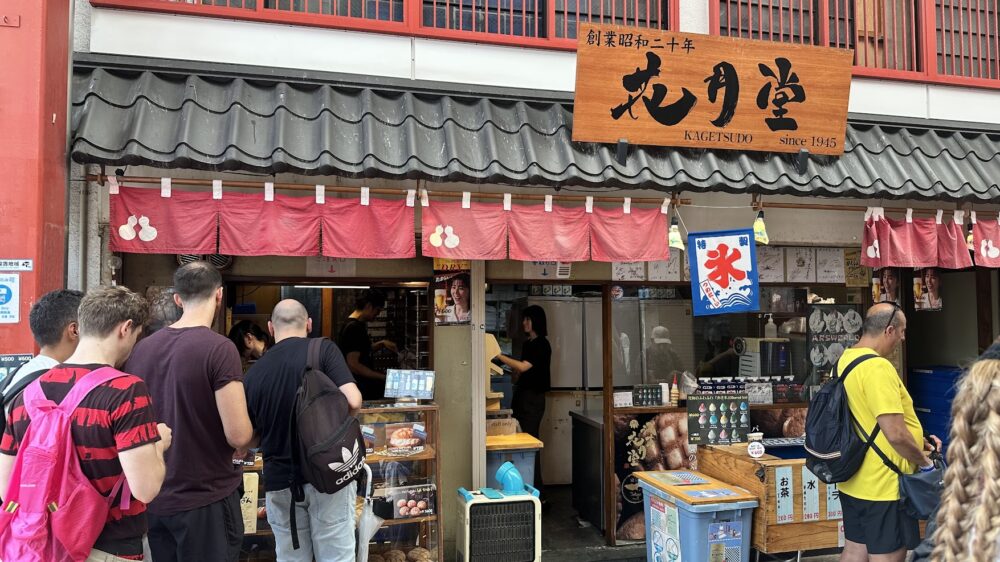
Nishi‑Sando’s east entrance, with an atmosphere reminiscent of the Kabuki‑za Theater If you walk west from the main hall of Senso‑ji (to your left as you face it), you’ll soon see the entrance to a lively area lined with many banners. This is Nishi‑Sando. With its “Festival Shopping Street” concept, it has a vibrant and festive atmosphere. One of its unique features is the wooden walkway — something normally not permitted on public roads — made possible because this shopping street is located on private land belonging to Senso‑ji.
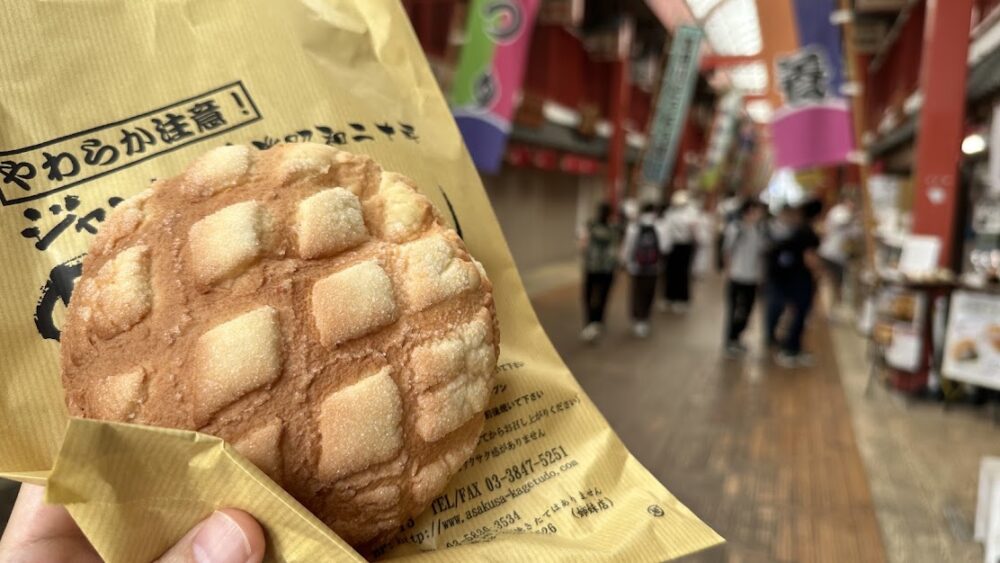
Freshly baked, piping‑hot melon‑pan. ¥320. When it comes to popular treats in Nishi‑Sando, melon‑pan is the star. Despite its name, it doesn’t taste like melon — it’s a classic Japanese sweet bread with a crisp cookie crust on the outside and a soft, fluffy interior. Kagetsudo’s melon‑pan is large, yet surprisingly light, so you can finish it easily. They also offer versions filled with vanilla or matcha ice cream, making them a great choice on hot days.
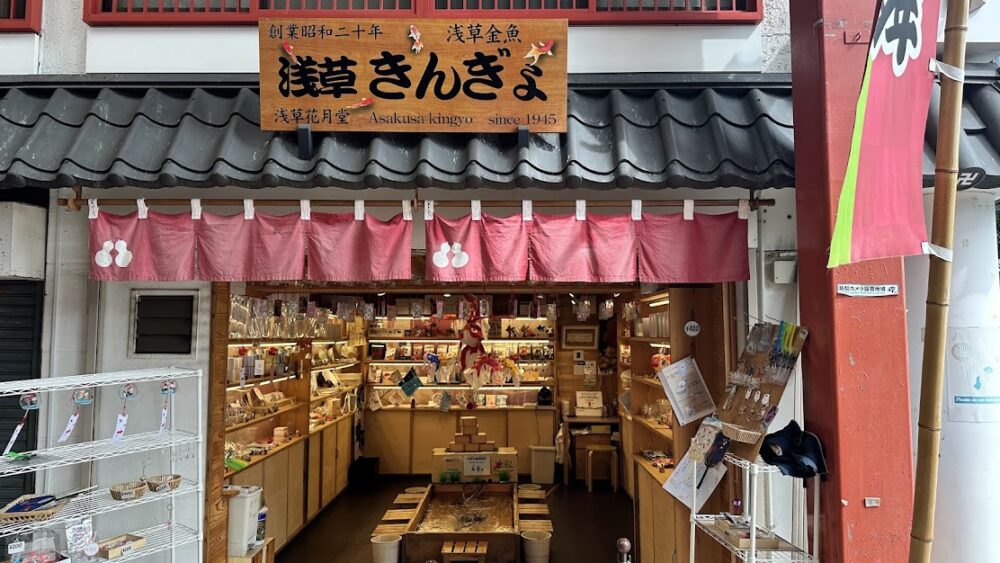
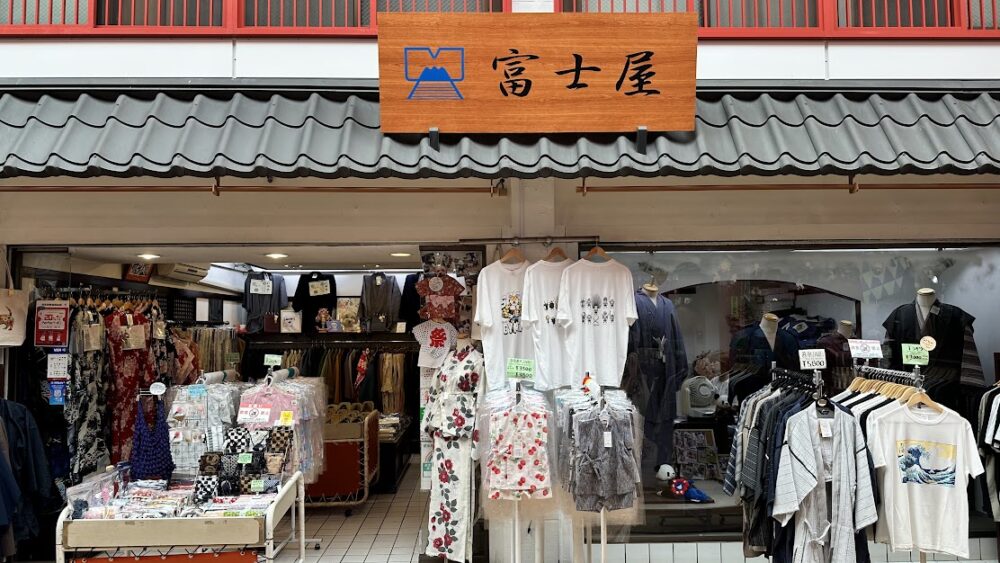
Asakusa Kingyo: Enjoy goldfish scooping — a classic Japanese festival game — all year round. Fujiya:A shop specializing in traditional Japanese clothing and accessories. Their children’s yukata are especially cute.
Hoppy Street
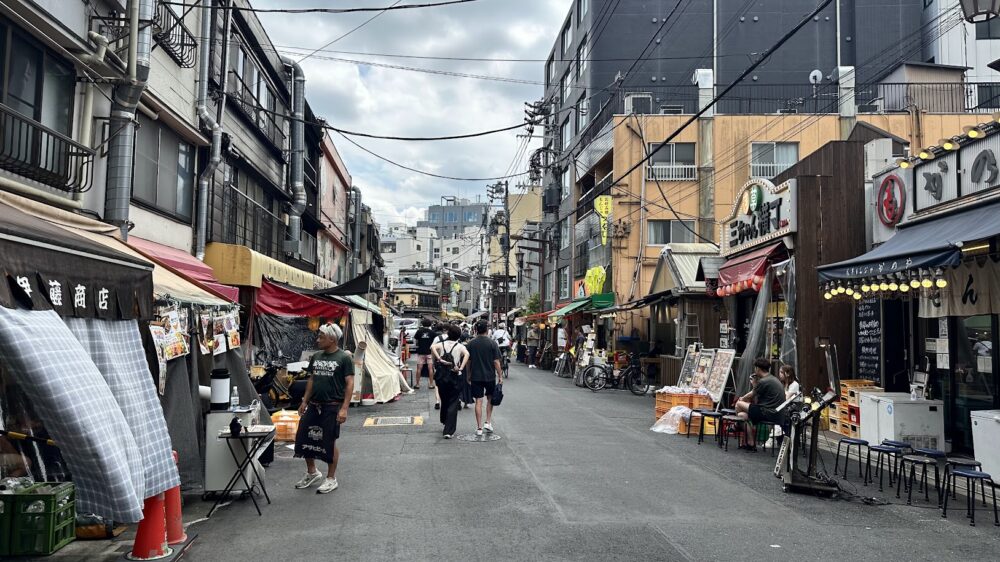
Hoppy Street, which connects to Denbōin Street, is a must‑visit area for anyone who enjoys drinking. The street is named after “Hoppy,” a malt‑based beverage that is traditionally mixed with shōchū — a classic drinking style that has long been loved in Japan. Many izakaya line the street and open from early in the day, making it an ideal place to stop by when you’re tired from sightseeing. With its nostalgic, old‑fashioned atmosphere, Hoppy Street offers a casual and distinctly Asakusa way to enjoy a drink. For additional information, please check the link below.Explaining the History and Overview of Asakusa Hoppy Street | BESPES
Totoya
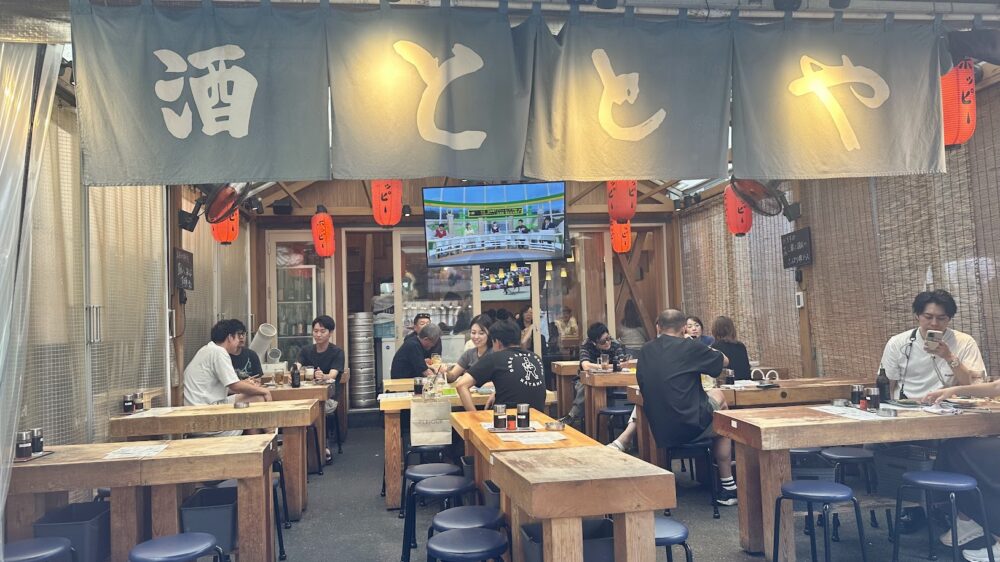
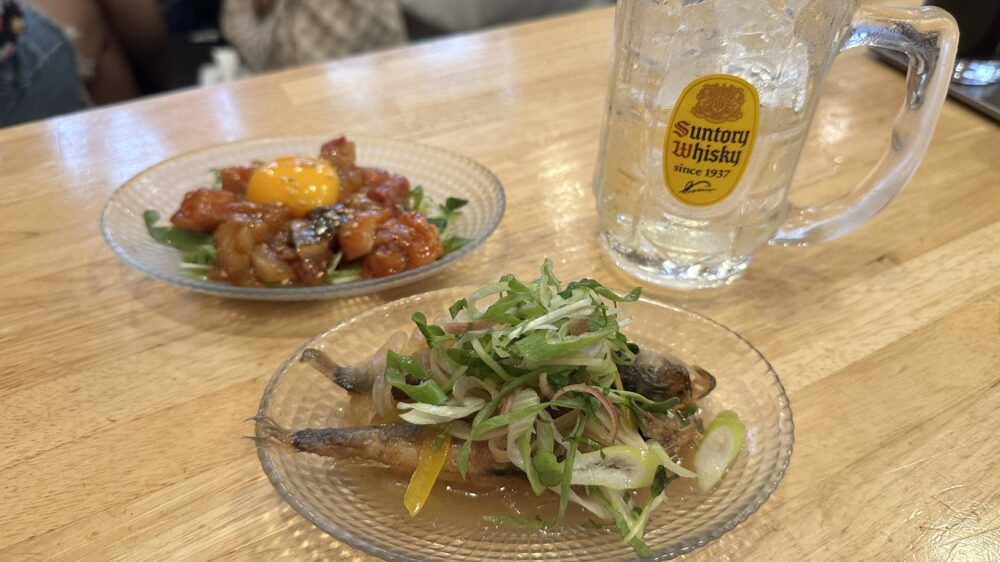
A spacious two‑floor restaurant with about 200 seats and wide table spacing. Highball (whisky soda, ¥600), marinated mehikari fish (¥858), fish yukhoe (¥968) With a proud 150-year history, the restaurant still sources its fish directly from the founder’s original fish shop, offering a wide variety of delicious seafood dishes. They also serve plenty of alcoholic drinks — including Hoppy, beer, sake, and shōchū. Soft drinks are available as well, making it a comfortable place for families with children.
General Information
Name Totoya Address 2-4-13 Asakusa, Taito-ku, Tokyo Hours 10:00 a,m, – 11:00 p.m.
Kappabashi Kitchen Town
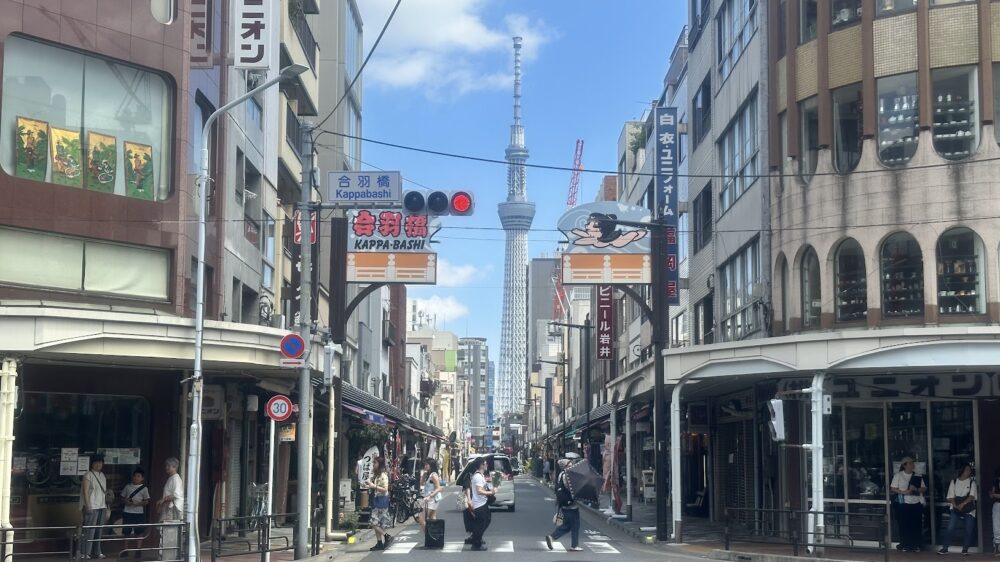
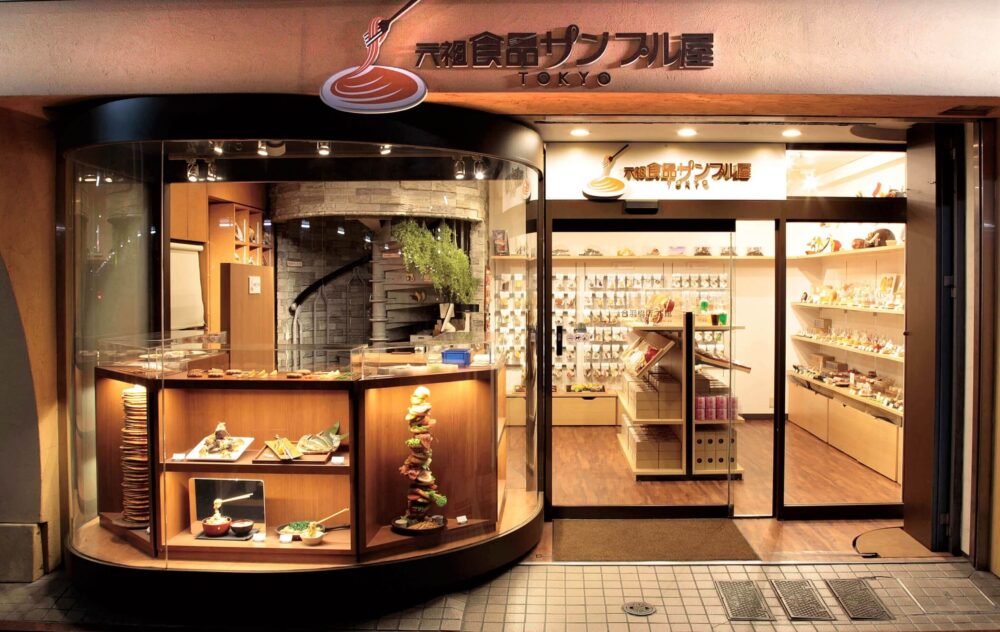
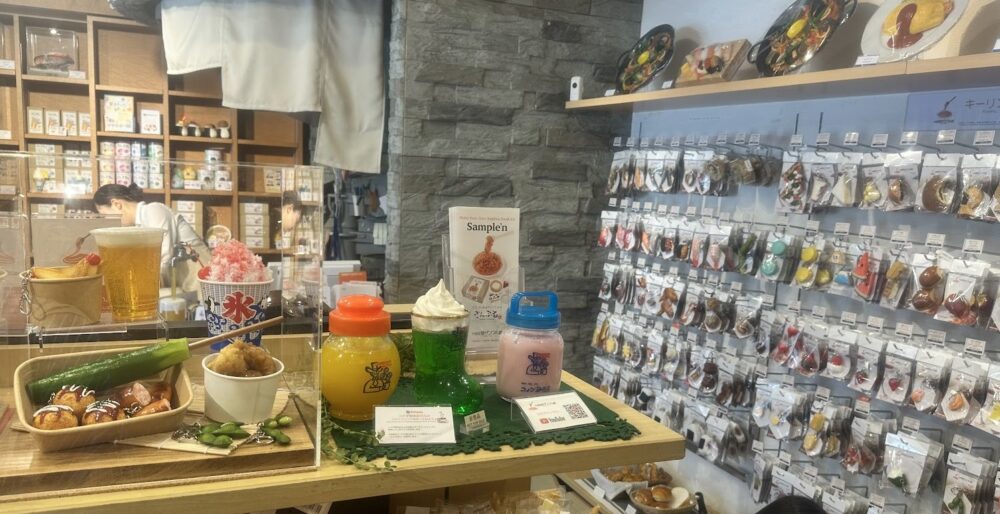
Tokyo Skytree as seen from the Kappabashi intersection. Source:Replica food store, Ganso Shokuhin Sample-ya | 元祖食品サンプル屋 In addition to items for restaurants, they also offer small goods such as keychains, making them perfect for souvenirs.
General Information-Ganso Shokuhin Sample-ya
Address 3-7-6 Nishi-Asakusa, Taito-ku, Tokyo Near the Kappabashi intersection Hours 10:00 am – 5:30 pm Access Tsukuba Express “Asakusa Station” Note: This is different from the Asakusa Station on the Tobu Line and subway lines. Tokyo Metro Ginza Line “Tawaramachi Station” Tokyo Metro Hibiya Line “Iriya Station” Official web site Replica food store, Ganso Shokuhin Sample-ya | 元祖食品サンプル屋
In recent years, Kappabashi Dogugai Street has become a popular destination for visitors to Asakusa. The street is lined with shops selling professional‑grade kitchen tools, as well as the realistic food samples commonly seen in Japanese restaurants. Japanese knives have also gained popularity overseas, and the specialty stores along Kappabashi Dogugai Street are now bustling with many international visitors.

コメント